Joint Exams Need Structured Rheumatology Documentation
Rheumatologists need structured fields for tender joints, swollen joints, stiffness, range of motion, deformity, pain location, gait, grip strength, functional status, and follow-up comparison.
EMR-EHRs Rheumatology EMR Software helps rheumatology practices manage joint exams, autoimmune care, medication monitoring, labs, imaging, prior authorizations, scheduling, billing, and secure records in one connected workflow.
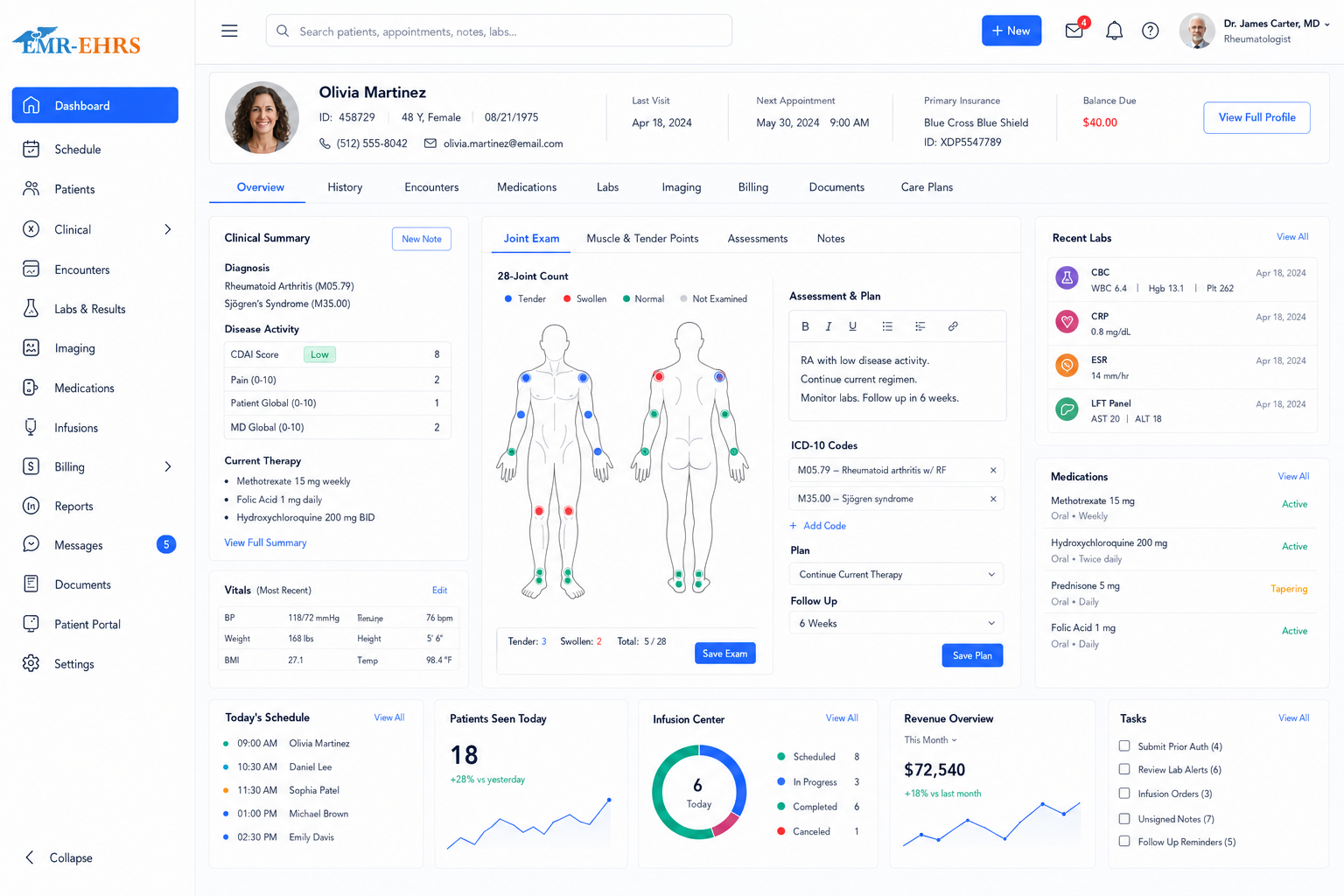
Rheumatology EMR software helps rheumatology practices manage patient records, rheumatology consultations, joint exam documentation, arthritis care, autoimmune disease tracking, rheumatoid arthritis follow-ups, medication management, biologics if supported, DMARD therapy, prior authorizations, lab and imaging review, scheduling, billing, patient portal access, reporting, and secure rheumatology records.
EMR-EHRs rheumatology EMR software supports the full rheumatology care workflow: patient intake, musculoskeletal history, joint exam documentation, arthritis and autoimmune disease tracking, lab and imaging review, medication management, biologic and infusion workflows if supported, prior authorization tracking, billing, scheduling, reporting, and patient engagement.
Rheumatology practices need more than general charting. They manage chronic autoimmune conditions, joint exams, medication monitoring, biologic workflows if supported, DMARD tracking, prior authorizations, lab reviews, imaging reports, recurring follow-ups, billing complexity, and secure patient records.
Rheumatologists need structured fields for tender joints, swollen joints, stiffness, range of motion, deformity, pain location, gait, grip strength, functional status, and follow-up comparison.
RA workflows need joint count tracking if supported, morning stiffness documentation, pain/function review, medication response, lab monitoring, imaging review, disease activity tracking if supported, and care plan updates.
Lupus, inflammatory arthritis, and connective tissue disease workflows require symptom review, flare tracking, fatigue documentation, rash history, organ-system review if applicable, lab monitoring, referrals, and follow-up reminders.
Rheumatology teams often manage medication history, lab monitoring, side effect documentation, refill tasks, biologic therapy if supported, DMARD tracking, and prior authorization follow-up.
Specialty medication workflows may require diagnosis details, medication history, failed therapy documentation if applicable, step therapy notes if needed, labs, payer communication, approvals, denials, and renewal reminders.
Practices may need infusion scheduling, biologic administration notes, injection documentation, medication lot details if supported, consent notes, monitoring notes, procedure billing, and follow-up tasks.
Inflammatory markers, autoimmune labs, CBC/CMP monitoring if applicable, uric acid, X-rays, ultrasound, MRI, DEXA if applicable, outside records, and abnormal result follow-ups should stay connected to the patient record.
Rheumatology patients often require recurring visits, lab monitoring, medication review, imaging follow-ups, infusion visits if supported, injection visits if applicable, and refill management.
Billing may involve rheumatology visits, RA follow-ups, autoimmune disease follow-ups, injections, infusions if supported, biologic therapy documentation if supported, prior authorizations, modifiers, denials, and unpaid claims.
Practices need visibility into visit volume, RA follow-ups, lab monitoring, prior authorizations, medication tasks, infusion tasks if supported, claims, denials, revenue, and provider productivity.
Capture demographics, insurance, referral source, chief complaint, prior diagnoses, outside records, consent forms, and intake details.
Collect insurance details, eligibility information, preferred pharmacy, emergency contact, communication preferences, and responsible party details if applicable.
Document joint pain, swelling, stiffness, pain location, range of motion concerns, functional limitations, morning stiffness, gait concerns, spine symptoms if applicable, prior injuries, and prior treatments.
Document autoimmune history, family history, fatigue, rash, fever, flare history, organ-system concerns if applicable, prior rheumatology care, medication history, allergies, and referral details.
Track pain severity, stiffness duration, fatigue, flare frequency, flare triggers, functional impact, work/school limitations if applicable, and patient-reported concerns.
Record tender joints, swollen joints, range of motion, warmth, redness, deformity, grip strength, gait assessment, spine mobility if applicable, functional limitations, and provider assessment.
Document RA activity, inflammatory arthritis symptoms, tender joint count if supported, swollen joint count if supported, morning stiffness, functional status, medication response, labs, imaging, and care plan updates.
Track lupus symptoms, flare history, fatigue, rash, joint symptoms, organ-system review if applicable, lab monitoring, medication response, referrals, care plan updates, and follow-up reminders.
Document gout flares, affected joints, triggers, uric acid review if available, osteoarthritis symptoms, chronic joint pain, functional impact, imaging review, medication plan, injection plan if applicable, and follow-up.
Manage NSAIDs, steroids, DMARDs, biologics if applicable, allergies, medication response, side effects, adherence, refills, lab monitoring, pharmacy communication, and e-prescribing.
Track DMARD therapy, biologic therapy if applicable, medication start history, lab monitoring, treatment response, adverse effects, refill planning, prior authorization status, and follow-up reminders.
Track prior authorization tasks, medication history, failed therapy documentation if applicable, step therapy details if needed, lab documentation, diagnosis documentation, payer follow-ups, approvals, denials, renewals, and patient communication.
Manage infusion scheduling, infusion documentation, biologic administration notes, injection documentation, joint injection notes if supported, medication lot details if supported, consent notes, monitoring notes, procedure billing support if applicable, and follow-up tasks.
Review lab orders, inflammatory markers if available, autoimmune labs if available, CBC/CMP monitoring if applicable, uric acid if available, abnormal results, medication monitoring needs, patient notifications, and follow-up tasks.
Review X-rays, ultrasound reports if applicable, MRI reports, DEXA reports if applicable, outside records, referral documents, uploaded files, abnormal findings, and follow-up actions.
Support rheumatology intake forms, pain/function forms, refill requests, secure messages, lab communication if available, medication instructions, treatment plan access if supported, education, appointment requests, and follow-up reminders.
Manage new rheumatology visits, RA follow-ups, lupus follow-ups, gout follow-ups, lab monitoring visits, medication monitoring visits, infusion visits if supported, injection visits if applicable, imaging follow-ups, reminders, cancellations, and no-shows.
Connect documentation, ICD-10 codes, CPT codes, modifiers, eligibility, prior authorizations, infusion/injection documentation if supported, electronic claims, denials, payments, patient balances, and A/R tracking.
Review rheumatology visit volume, RA follow-ups, lupus follow-ups, gout follow-ups, lab monitoring tasks, medication/refill tasks, prior authorization status, infusion follow-ups if supported, claims, denials, revenue, and provider productivity.
Joint exam documentation should support clinical charting while the rheumatology provider remains responsible for final assessment, diagnosis, medication decisions, and care planning.
Specific scoring tools, calculations, or automated disease activity scoring should only be listed when supported.
EMR-EHRs supports autoimmune documentation and follow-up tracking without making unsupported disease outcome claims.
Medication, biologic therapy, and treatment decisions must remain under the rheumatology provider's final review and clinical judgment.
EMR-EHRs tracks, supports, organizes, helps document, and improves visibility into pending authorization tasks while keeping payer outcomes outside software claims.
Infusion, biologic administration, medication lot tracking, injection workflows, and procedure billing should only be claimed when supported.
Confirm support for specific lab interfaces, imaging connections, or device integrations, including connection method and implementation scope, during evaluation.
EMR-EHRs connects clinical, administrative, patient communication, and billing workflows so rheumatology practices can manage joint exams, autoimmune disease documentation, medication monitoring, lab review, scheduling, billing, patient engagement, reports, and daily operations in one connected system.
Confirm support for specific labs, clearinghouses, imaging systems, pharmacies, or platforms, including connection method and implementation scope, during evaluation.
HIPAA-focused workflows, audit-friendly rheumatology records, secure arthritis and autoimmune care documentation, and design that supports secure documentation.
These reporting views support visibility into reporting, while keeping interpretation and final decisions with qualified practice staff.
AI-powered tools should support documentation and administrative efficiency while keeping rheumatology providers responsible for final review, diagnosis, lab interpretation, medication decisions, treatment decisions, and signed records.
Draft support for musculoskeletal history, autoimmune history, joint exam, lab review, assessment, and plan.
Help organize joint symptoms, medication response, lab monitoring, flare status, and care plan updates.
Assist with structured joint exam summaries while providers remain responsible for final assessment.
Support lab trend summaries for provider review and follow-up task visibility.
Prompt teams to review missing documentation, authorization status, injection or infusion details if supported, and claim readiness.
Support refill tasks, prior authorization tasks if available, no-show insights, and recurring follow-up reminders.
Manage rheumatology consultations, joint exams, medication monitoring, lab review, billing, scheduling, patient portal communication, and reporting.
Document joint symptoms, musculoskeletal exams, autoimmune disease activity, lab/imaging review, medication plans, treatment plans, and follow-up care.
Support rheumatoid arthritis, osteoarthritis, gout, psoriatic arthritis, chronic joint pain, follow-up tracking, and patient education.
Manage lupus, inflammatory arthritis, connective tissue disease workflows if applicable, medication monitoring, labs, and follow-up care.
Support infusion scheduling, biologic documentation, prior authorizations, monitoring notes, billing, and follow-up tasks if available.
Centralize schedules, records, documentation, lab reviews, billing, reports, patient communication, and staff tasks.
Track eligibility, claims, authorizations, biologic/infusion documentation if supported, denials, patient balances, A/R, and unpaid claims.
Manage rheumatology visits, lab monitoring visits, follow-ups, reminders, no-shows, intake forms, and provider schedules.
Manage records, scheduling, billing, portal communication, staff workflows, lab reviews, and reporting across locations.
| Workflow Area | Generic EMR | Rheumatology EMR |
|---|---|---|
| Rheumatology consultations | General visit notes | Musculoskeletal history, autoimmune history, joint exam, lab review, and treatment plan |
| Joint exams | Manual text fields | Tender joints, swollen joints, ROM, stiffness, flare tracking, and functional status |
| RA care | Basic progress notes | RA follow-ups, joint count if supported, medication response, lab trends, and care plan updates |
| Autoimmune disease | General documentation | Lupus and autoimmune symptom tracking, flare review, labs, referrals, and follow-up plans |
| Medication workflow | General eRx | DMARDs, biologics if applicable, lab monitoring, side effects, refills, and prior authorizations |
| Prior authorizations | Manual admin process | Task tracking, documentation support, approval/denial tracking, and renewal reminders |
| Infusion/injection workflow | Often separate or manual | Infusion/injection documentation if supported, monitoring notes, billing, and follow-up tasks |
| Lab and imaging review | Attachments only | Lab trends, imaging review, abnormal result follow-up, and patient communication |
| Scheduling | Basic appointments | Rheumatology visits, lab monitoring, infusion visits if supported, recalls, and chronic follow-ups |
| Billing | General claims | Rheumatology visits, injections/infusions if supported, biologics, modifiers, authorizations, and denials |
| Reporting | Basic reports | Disease follow-ups, lab monitoring, prior authorizations, denials, revenue, and productivity |
EMR-EHRs supports rheumatology consultations, joint exam charting, RA follow-ups, autoimmune disease tracking, medication management, scheduling, billing, and reports.
EMR-EHRs helps connect clinical, administrative, patient communication, and financial workflows for rheumatology practices.
Track joint symptoms, lab results, imaging reports, medication response, prior authorizations, refill tasks, follow-ups, and patient communication from one workflow.
EMR-EHRs helps teams manage documentation tasks, payer follow-ups, eligibility, claims, authorizations, denials, patient balances, and A/R visibility.
Support intake forms, refill requests, secure messages, lab communication, care instructions, follow-up reminders, and patient engagement.
EMR-EHRs helps rheumatology practices configure templates, schedules, billing workflows, lab review workflows, portal workflows, reports, and staff workflows. Phone: (480) 782-1116. Email: jason@1stproviderschoice.com.
Review rheumatology documentation needs, joint exam workflows, RA and autoimmune care workflows, medication monitoring, prior authorization needs, lab review, scheduling, billing, patient portal, and reporting goals.
Set up users, roles, schedules, rheumatology templates, billing settings, intake forms, reminders, reports, portal workflows, and access controls.
Configure consultation templates, RA follow-up templates, joint exam workflows, medication management workflows, prior authorization workflows if supported, infusion/injection workflows if supported, billing workflows, follow-up tasks, and reporting views.
Train rheumatology providers, clinical staff, front desk staff, billing teams, and administrators.
Support your rheumatology team during launch.
Improve templates, forms, reports, reminders, billing workflows, lab review workflows, patient portal workflows, and staff adoption after launch.













Simplify rheumatology consultations, joint exam documentation, rheumatoid arthritis follow-ups, autoimmune disease tracking, medication management, biologic and DMARD workflows if supported, prior authorization tracking, lab and imaging review, patient communication, scheduling, rheumatology billing, reporting, and secure rheumatology records with rheumatology EMR software from EMR-EHRs.
Phone:(480) 782-1116 Email:jason@1stproviderschoice.com