Vascular Surgery EMR Software

Vascular Surgery EMR Software for Vascular Notes, Imaging, Procedures & Billing

EMR-EHRs Vascular Surgery EMR Software helps vascular practices manage consultations, vascular exams, imaging review, procedure planning, follow-up care, billing, scheduling, reporting, and secure patient records in one connected workflow.

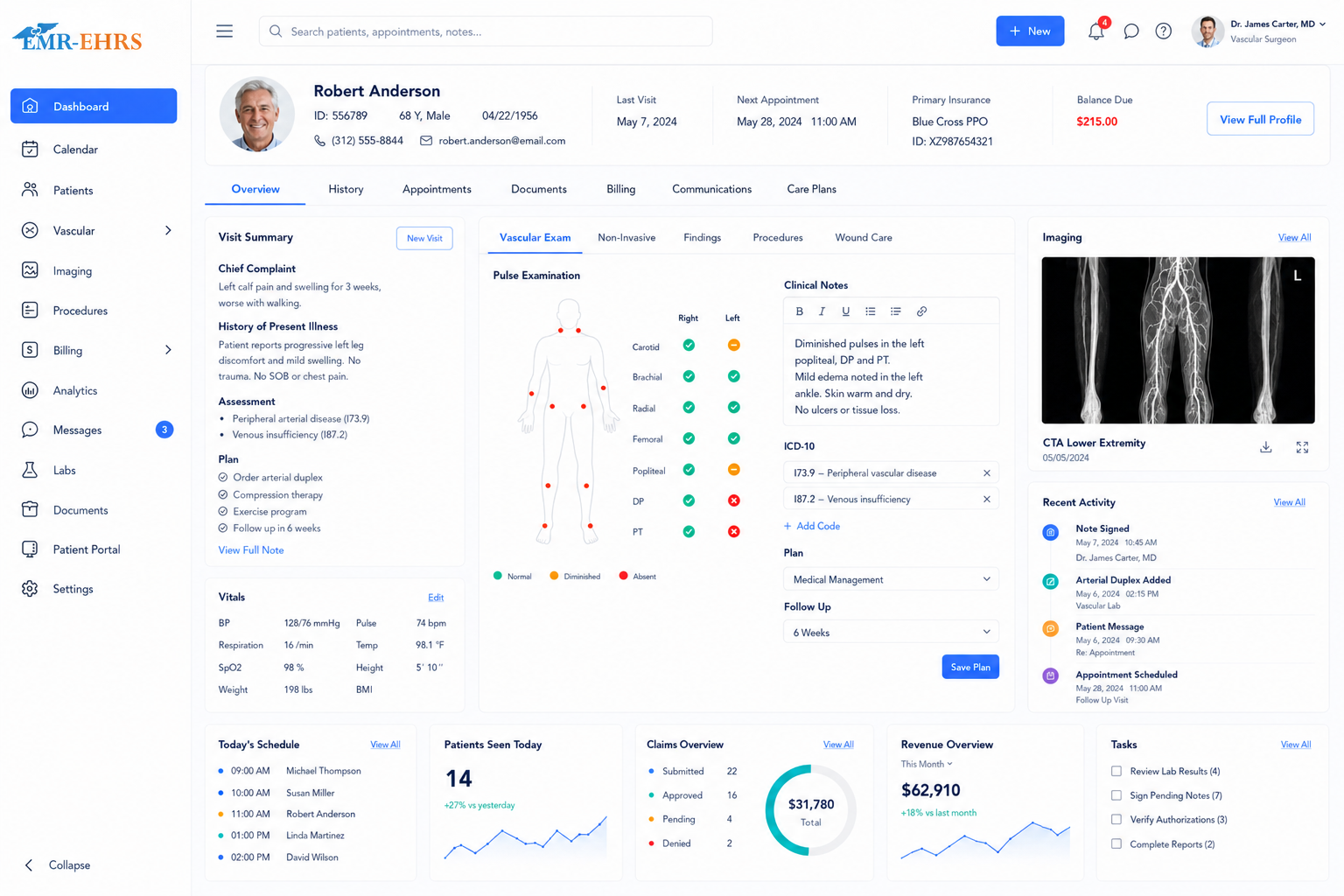
Vascular Surgery EMR dashboard preview
Vascular NotesPulse FindingsArterial CareVenous CareDiagnostic ReviewProceduresSurveillanceBillingReports
Quick answer

What Is Vascular Surgery EMR Software?

Vascular surgery EMR software helps vascular practices manage patient records, vascular consultations, vascular history, vascular exam documentation, pulse findings, arterial disease workflows, venous disease workflows if supported, Doppler or vascular ultrasound review if supported, ABI review if applicable, CT angiography review if applicable, procedure planning, pre-op documentation, clearance tracking if supported, consent tracking if supported, procedure notes if supported, operative notes if supported, post-op follow-ups, surveillance scheduling, medication management, scheduling, billing, patient communication, reports, and secure vascular records.

EMR-EHRs vascular surgery EMR software supports the full vascular workflow: patient intake, vascular history, vascular exam charting, arterial documentation, venous documentation if supported, diagnostic review, procedure planning, pre-op documentation, procedure documentation if supported, post-op follow-ups, surveillance scheduling, billing, reporting, and patient engagement.

Why Vascular Surgery Practices Need Specialty-Specific EMR Software

Vascular surgery practices need more than general charting. They manage vascular consultations, pulse findings, arterial workflows, venous workflows if supported, diagnostic review, procedure planning, pre-op documentation, post-op recovery, surveillance scheduling, billing, reporting, and secure vascular records.

Vascular Consultations Need Specialty-Specific Documentation

Vascular teams need structured documentation for chief complaint, referral reason, vascular concern, affected limb or side, vascular history, prior vascular procedures, diagnostic review, vascular exam findings, diagnosis support, treatment planning, procedure planning if applicable, and follow-up.

Vascular Exams Need Structured Fields

Vascular documentation should support pulse findings, limb laterality, edema, skin color, skin temperature if documented, skin changes, wounds or ulcers if applicable, varicose veins if supported, pain level, claudication symptoms if applicable, neurovascular findings, functional limitations, and symptom progression.

Arterial Disease Workflows Need More Than General Notes

Vascular practices need workflows for peripheral arterial disease, PAD documentation, claudication symptoms, limb pain, rest pain if applicable, limb ischemia findings if applicable, carotid disease if applicable, aneurysm follow-up if applicable, risk factors, medication review, diagnostic review, and surveillance follow-up.

Venous Disease and Phlebology Workflows Need Condition-Specific Documentation If Supported

Venous workflows may require varicose vein documentation, venous insufficiency documentation if applicable, edema tracking, skin changes, leg pain, venous ulcer tracking if applicable, compression therapy documentation if supported, vein procedure planning if supported, post-procedure follow-up, recurrence monitoring, and patient instructions.

Wound, Ulcer and Limb Follow-Up Need Vascular Context If Applicable

Vascular practices may need wound location, ulcer documentation, wound size if supported, drainage, skin changes, infection signs if documented, pain level, vascular status, pulse findings if documented, diagnostic review, treatment plan, patient wound instructions, and follow-up reminders.

Diagnostic Review Is Central to Vascular Surgery Workflows

Vascular care often depends on Doppler review if supported, vascular ultrasound review if supported, ABI results if applicable, duplex study reports if supported, CTA review if applicable, lab results if applicable, outside records, uploaded files, abnormal findings, procedure planning support, patient notification, and follow-up tasks.

Procedure Planning Requires Pre-Op Visibility

Vascular teams need visibility into planned procedure, procedure indication, affected vessel, affected limb or side, diagnostic review, clearance status if supported, consent status if supported, lab review if applicable, medication review, anticoagulant review if applicable, allergy review, risk factors if documented, patient instructions, and scheduling tasks.

Procedure Documentation Must Connect to Follow-Up and Billing

Procedure notes if supported, operative notes if supported, surgical case tracking if supported, vessel/limb/side documentation, device/graft/stent details if supported, diagnosis connection, post-procedure instructions, follow-up tasks, and procedure billing support should stay connected.

Post-Op Follow-Ups Need Recovery and Surveillance Tracking

Vascular post-op visits need pain review, wound/incision status, pulse findings if documented, swelling, bleeding if applicable, limb symptoms, complication review, follow-up imaging if applicable, medication updates, anticoagulant or antiplatelet review if applicable, activity restrictions, patient instructions, and surveillance reminders.

Vascular Scheduling Is More Complex Than Basic Appointments

Practices need scheduling for new vascular consults, diagnostic follow-ups, ultrasound follow-ups if supported, pre-op visits, procedures if supported, post-op visits, wound/ulcer follow-ups if applicable, recurring surveillance visits, referral follow-ups, reminders, cancellations, no-shows, and waitlists.

Vascular Billing Needs Specialty-Aware Revenue Cycle Management

Billing teams need support for vascular consultation billing, arterial disease visit billing, venous disease visit billing if applicable, diagnostic review visit billing if applicable, pre-op visits, post-op visits, procedure billing if supported, vein procedure billing if supported, wound/ulcer visit billing if applicable, CPT, ICD-10, modifiers, authorizations, claim readiness, denials, payments, and A/R.

Reports Must Show Clinical, Diagnostic, Surveillance, Operational, and Financial Visibility

Practices need visibility into vascular consultation volume, arterial visit volume, venous visit volume if applicable, diagnostic follow-ups, ultrasound follow-ups if supported, pre-op visits, post-op visits, procedure volume if supported, wound/ulcer visits if applicable, unsigned notes, claims, denials, revenue, and provider productivity.

Manage the Full Vascular Surgery Care Journey From Intake to Follow-Up

1

Patient Intake and Referral Source Capture

Capture demographics, insurance, referral source, chief complaint, vascular concern, affected limb or side if applicable, prior diagnoses, prior imaging, outside records, consent forms if supported, and intake details.

2

Insurance, Eligibility, Authorization, and Contact Details

Track insurance, eligibility, responsible party, preferred pharmacy, emergency contact, authorization needs, payer requirements, and communication preferences.

3

Vascular History Documentation

Document vascular symptoms, limb pain, swelling, claudication symptoms if applicable, rest pain if applicable, wound or ulcer history if applicable, varicose vein history if supported, prior vascular procedures, smoking history if documented, medication history, anticoagulant history if applicable, antiplatelet medication history if applicable, allergy history, and risk factors if documented.

4

Vascular Consultation Workflow

Document chief complaint, referral reason, history of present illness, affected limb or side, vascular history, vascular exam, pulse findings, skin changes, wound/ulcer findings if applicable, diagnostic review, diagnosis support, treatment plan, procedure planning if applicable, and follow-up plan.

5

Vascular Exam Charting

Document pulse findings, limb laterality, edema, skin color, skin temperature if documented, skin changes, wounds or ulcers if applicable, varicose veins if supported, sensation, pain level, claudication symptoms if applicable, neurovascular findings, functional limitations, and symptom progression.

6

Arterial Disease Workflow

Support documentation for peripheral arterial disease, PAD symptoms, claudication, limb pain, rest pain if applicable, limb ischemia findings if applicable, carotid disease if applicable, aneurysm follow-up if applicable, pulse findings, ABI review if applicable, Doppler/ultrasound review if supported, CTA review if applicable, medication review, risk factor documentation, procedure planning, and surveillance follow-up.

7

Venous Disease and Phlebology Workflow If Supported

Support documentation for varicose veins, venous insufficiency if applicable, edema, skin changes, leg pain, venous ulcers if applicable, compression therapy documentation if supported, vein procedure planning if supported, procedure follow-up, recurrence monitoring, patient instructions, and surveillance reminders if applicable.

8

Wound, Ulcer and Limb Follow-Up Workflow If Applicable

Support wound location, ulcer documentation if applicable, wound size if supported, drainage, skin changes, infection signs if documented, pain level, vascular status, pulse findings if documented, diagnostic review, treatment plan, wound instructions, follow-up reminders, and related diagnostic review.

9

Doppler, Vascular Ultrasound, ABI, CTA, Lab and Outside Record Review

Review Doppler results if supported, vascular ultrasound results if supported, ABI results if applicable, duplex study results if supported, CT angiography reports if applicable, lab results if applicable, outside imaging records, referral documents, uploaded files, prior study comparison if documented, abnormal findings, procedure planning support, patient notification, and follow-up tasks.

10

Procedure Planning and Pre-Op Workflow

Track planned procedure, procedure indication, affected vessel/limb/side if applicable, diagnostic review, pre-op checklist, clearance status if supported, consent status if supported, lab review if applicable, medication review, anticoagulant review if applicable, allergy review, risk factor documentation if applicable, patient instructions, and scheduling tasks.

11

Clearance, Consent, Diagnostics, Labs and Medication Review

Review clearance requirements if supported, consent forms if supported, diagnostic results, imaging reports, lab results if applicable, current medications, anticoagulants if applicable, antiplatelet medications if applicable, allergies, risk factors if documented, and pre-op instructions.

12

Procedure Notes, Operative Documentation and Vascular Case Tracking If Supported

Document office procedures if supported, vascular procedure notes if supported, operative notes if supported, procedure indication, consent status if supported, findings, vessel/limb/side if applicable, device/graft/stent details if supported, complications if documented, post-procedure instructions, provider signature, and follow-up tasks.

13

Post-Op and Post-Procedure Follow-Up Tracking

Document procedure history, post-op visit reason, pain level, wound/incision status, pulse findings if documented, swelling, bleeding if applicable, limb symptoms, complication review, follow-up imaging if applicable, medication updates, anticoagulant or antiplatelet review if applicable, activity restrictions, patient instructions, and surveillance follow-up reminders.

14

Medication Management and E-Prescribing

Manage current medications, previous medications, allergies, anticoagulants if applicable, antiplatelet medications if applicable, statins if applicable, blood pressure medications if applicable, pain medications if applicable, medication changes, pre-op medication review, post-op medication review, refills, pharmacy communication, and e-prescribing.

15

Patient Portal and Vascular Communication

Support online registration, vascular intake forms, procedure intake forms, pre-op forms, consent forms if supported, appointment requests, secure messaging, diagnostic follow-up reminders, pre-op instructions, post-op instructions, wound/ulcer instructions if applicable, medication instructions, document sharing if available, online bill pay if available, and demographic updates.

16

Vascular Scheduling, Surveillance and Reminders

Manage new vascular consultations, diagnostic follow-ups, ultrasound follow-ups if supported, pre-op visits, procedure scheduling if supported, post-op visits, wound/ulcer follow-ups if applicable, recurring surveillance visits, referral follow-ups, multi-provider scheduling, multi-location scheduling if available, waitlists, cancellations, no-shows, reminders, patient balance alerts, and missing intake alerts.

17

Vascular Billing and Claims

Connect documentation, diagnosis codes, CPT codes, modifiers, authorizations, procedure documentation if supported, electronic claims, denial tracking, payment posting, patient balances, collections, unpaid claims, and A/R tracking.

18

Reports and Practice Performance Visibility

Review vascular consultation volume, arterial visit volume, venous visit volume if applicable, pre-op visits, post-op visits, procedure volume if supported, diagnostic follow-up reports, ultrasound follow-up reports if supported, wound/ulcer follow-up reports if applicable, pending diagnostic reviews, unsigned notes, follow-up tasks, claims, denials, revenue, and provider productivity.

Vascular Surgery Documentation Templates Built for Arterial, Venous and Procedure Workflows

Vascular Consultation Templates

  • Chief complaint
  • Referral reason
  • Vascular concern
  • Affected limb/side if applicable
  • History of present illness
  • Vascular history
  • Prior vascular procedures
  • Medication history
  • Anticoagulant history if applicable
  • Antiplatelet medication history if applicable
  • Allergy history
  • Diagnostic review
  • Vascular exam
  • Assessment
  • Diagnosis support
  • Treatment plan
  • Procedure plan if applicable
  • Follow-up plan

Vascular Exam Templates

  • Pulse findings
  • Limb laterality
  • Edema
  • Skin color
  • Skin temperature if documented
  • Skin changes
  • Wounds or ulcers if applicable
  • Varicose veins if supported
  • Pain level
  • Claudication symptoms if applicable
  • Neurovascular findings
  • Functional limitations
  • Symptom progression

Arterial Disease Templates

  • Peripheral arterial disease documentation
  • PAD symptoms
  • Claudication symptoms
  • Limb pain
  • Rest pain if applicable
  • Limb ischemia findings if applicable
  • Carotid disease workflow if applicable
  • Aneurysm follow-up if applicable
  • Pulse findings
  • ABI result review if applicable
  • Doppler/ultrasound review if supported
  • CTA review if applicable
  • Risk factor documentation
  • Medication review
  • Procedure planning if applicable
  • Surveillance follow-up

Venous Disease and Phlebology Templates If Supported

  • Varicose vein documentation
  • Venous insufficiency documentation if applicable
  • Edema
  • Skin changes
  • Leg pain
  • Venous ulcer documentation if applicable
  • Compression therapy documentation if supported
  • Vein procedure planning if supported
  • Procedure follow-up
  • Recurrence monitoring
  • Patient instructions

Wound and Ulcer Follow-Up Templates If Applicable

  • Wound location
  • Ulcer documentation if applicable
  • Wound size if supported
  • Drainage
  • Skin changes
  • Infection signs if documented
  • Pain level
  • Vascular status
  • Pulse findings if documented
  • Diagnostic review
  • Treatment plan
  • Wound care instructions
  • Follow-up reminders

Pre-Op Visit Templates

  • Planned procedure
  • Procedure indication
  • Affected vessel/limb/side if applicable
  • Diagnostic review
  • Clearance status if supported
  • Consent status if supported
  • Medication review
  • Anticoagulant review if applicable
  • Antiplatelet medication review if applicable
  • Allergy review
  • Lab review if applicable
  • Risk factors if documented
  • Patient instructions
  • Pre-op education
  • Scheduling tasks
  • Follow-up plan

Procedure and Operative Note Templates If Supported

  • Procedure type
  • Indication
  • Consent documentation if supported
  • Procedure findings if supported
  • Vessel/limb/side if applicable
  • Device details if supported
  • Graft details if supported
  • Stent details if supported
  • Complications if documented
  • Patient tolerance if applicable
  • Post-procedure instructions
  • Follow-up plan
  • Provider signature

Post-Op and Post-Procedure Follow-Up Templates

  • Procedure history
  • Date of procedure/surgery
  • Pain review
  • Wound/incision status
  • Pulse findings if documented
  • Swelling
  • Bleeding if applicable
  • Limb symptoms
  • Complication review
  • Follow-up imaging if applicable
  • Medication review
  • Anticoagulant or antiplatelet review if applicable
  • Activity restrictions
  • Recovery instructions
  • Surveillance follow-up plan

Vascular Forms and Letters

  • Vascular intake forms
  • Procedure intake forms
  • Pre-op instruction forms
  • Post-op instruction forms
  • Consent forms if supported
  • Referral letters
  • Clearance request letters if applicable
  • Wound care instruction forms if applicable
  • Vascular patient education documents
  • Procedure instruction documents

Vascular Consultation and Vascular Exam Documentation

Vascular consultation and exam documentation should support clinical charting while the vascular surgeon remains responsible for final assessment, diagnosis, diagnostic interpretation, procedure decisions, treatment recommendations, and signed records.

Chief complaint
Referral reason
Vascular concern
Affected limb/side
Vascular history
Prior vascular procedures
Pain symptoms
Claudication symptoms if applicable
Rest pain if applicable
Swelling
Skin changes
Wounds or ulcers if applicable
Varicose veins if supported
Pulse findings
Limb laterality
Edema
Neurovascular findings
Doppler/ultrasound review if supported
ABI review if applicable
CTA review if applicable
Diagnosis support
Treatment options
Procedure planning if applicable
Surveillance follow-up plan

Arterial Disease, PAD and Aneurysm Documentation Workflow

Peripheral arterial disease documentation
PAD symptoms
Claudication symptoms
Limb pain
Rest pain if applicable
Limb ischemia findings if applicable
Pulse findings
ABI review if applicable
Duplex/ultrasound review if supported
CT angiography review if applicable
Carotid disease workflow if applicable
Aneurysm follow-up if applicable
Risk factor documentation
Smoking history if documented
Medication review
Anticoagulant review if applicable
Antiplatelet medication review if applicable
Procedure planning if applicable
Surveillance follow-up reminders

Venous Disease, Varicose Vein and Phlebology Documentation If Supported

Confirm support for venous disease, varicose vein, vein procedure, compression therapy, or phlebology workflows, including configuration and implementation requirements, during evaluation.

Varicose vein documentation
Venous insufficiency if applicable
Edema
Skin changes
Leg pain
Venous ulcer tracking if applicable
Compression therapy documentation if supported
Vein procedure planning if supported
Post-procedure follow-up
Recurrence monitoring
Patient instructions
Surveillance follow-up if applicable

Wound, Ulcer and Limb Follow-Up Tracking If Applicable

Confirm support for wound measurement, wound imaging, ulcer staging, or wound care workflows, including configuration and implementation requirements, during evaluation.

Wound location
Ulcer documentation if applicable
Wound size if supported
Drainage
Skin changes
Infection signs if documented
Pain level
Vascular status
Pulse findings if documented
Diagnostic review
Treatment plan
Patient wound instructions
Follow-up reminders

Doppler, Vascular Ultrasound, ABI, CTA, Lab and Outside Record Review

Confirm support for specific imaging systems, DICOM, PACS, vascular ultrasound systems, labs, hospitals, or device integrations, including connection method and implementation scope, during evaluation.

Doppler review if supported
Vascular ultrasound review if supported
ABI result review if applicable
Duplex study review if supported
CT angiography review if applicable
Lab result review if applicable
Outside imaging records
Referral documents
Uploaded files
Prior study comparison if documented
Abnormal result follow-up
Procedure planning support
Patient notification
Follow-up tasks

Pre-Op Planning, Surgical Clearance and Consent Tracking

Confirm support for automated consent tracking, clearance workflows, or checklist automation, including configuration and implementation requirements, during evaluation.

Planned procedure
Procedure indication
Affected vessel/limb/side if applicable
Diagnostic review
Pre-op checklist
Clearance status if supported
Consent tracking if supported
Lab review if applicable
Medication review
Anticoagulant review if applicable
Antiplatelet medication review if applicable
Allergy review
Risk factor documentation if applicable
Patient instructions
Pre-op education
Scheduling tasks
Missing documentation alerts

Procedure Notes, Operative Documentation and Vascular Case Tracking If Supported

Confirm support for operative note, vascular procedure, surgical case tracking, device tracking, graft tracking, stent tracking, or procedure billing workflows, including configuration and implementation requirements, during evaluation.

Office procedure documentation if supported
Vascular procedure documentation if supported
Operative note documentation if supported
Surgical case tracking if supported
Procedure indication
Consent status if supported
Findings
Vessel/limb/side if applicable
Device details if supported
Graft details if supported
Stent details if supported
Diagnosis connection
Complications if documented
Post-procedure instructions
Follow-up tasks
Procedure billing support if applicable
Provider signature

Post-Op Follow-Up, Vascular Recovery and Surveillance Tracking

Procedure history
Post-op visit reason
Pain level
Wound/incision status
Pulse findings if documented
Swelling
Bleeding if applicable
Limb symptoms
Complication review
Follow-up imaging if applicable
Medication updates
Anticoagulant or antiplatelet review if applicable
Activity restrictions
Patient instructions
Surveillance follow-up reminders

Scheduling for Vascular Consults, Diagnostic Follow-Ups, Procedures and Surveillance

New vascular consultation scheduling
Diagnostic follow-up scheduling
Ultrasound follow-up scheduling if supported
Pre-op visit scheduling
Procedure scheduling if supported
Post-op visit scheduling
Wound/ulcer follow-up scheduling if applicable
Recurring surveillance scheduling
Referral follow-up scheduling
Multi-provider scheduling
Multi-location scheduling if available
Waitlist management
Appointment reminders
Cancellation tracking
No-show tracking
Patient balance alerts
Missing intake alerts

Vascular Medication Management, Refills and E-Prescribing

Medication and treatment decisions must remain under the vascular surgeon's final review and clinical judgment.

Current medications
Previous medications
Allergies
Anticoagulants if applicable
Antiplatelet medications if applicable
Statins if applicable
Blood pressure medications if applicable
Pain medications if applicable
Medication changes
Pre-op medication review
Post-op medication review
Side effects if documented
Refill history
E-prescribing
Refill requests
Pharmacy communication
Medication instructions
Pre-op medication instructions
Post-op medication instructions
Patient education
Medication reconciliation

Patient Portal for Intake Forms, Procedure Instructions and Follow-Up Care

Online registration
Vascular intake forms
Procedure intake forms
Pre-op forms
Consent forms if supported
Appointment requests
Secure messaging
Diagnostic follow-up reminders
Surveillance visit reminders
Pre-op instructions
Post-op instructions
Wound/ulcer instructions if applicable
Medication instructions
Document sharing if available
Online bill pay if available
Demographic updates

All-in-One Vascular Surgery Practice Management Software

EMR-EHRs connects clinical, administrative, patient communication, and billing workflows so vascular surgery practices can manage vascular consultations, vascular exams, arterial workflows, venous workflows if supported, diagnostic review, procedure planning, pre-op documentation, post-op recovery, surveillance scheduling, billing, reports, and daily operations in one connected system.

Patient records
Digital intake
Vascular consultations
Vascular history documentation
Vascular exam documentation
Pulse findings
Arterial workflows
PAD workflows
Venous workflows if supported
Phlebology workflows if supported
Wound/ulcer tracking if applicable
Diagnostic review
Ultrasound review if supported
ABI review if applicable
CTA review if applicable
Pre-op documentation
Clearance tracking if supported
Consent tracking if supported
Procedure notes if supported
Operative documentation if supported
Device/graft/stent details if supported
Post-op follow-ups
Surveillance scheduling
Medication management
Anticoagulant review if applicable
E-prescribing
Patient portal
Scheduling
Billing
Claims
Reports
Staff tasks
Patient balances
Multi-provider workflow
Multi-location support if available

Vascular Portal, Billing, Diagnostic, Lab and Workflow Integrations

Confirm support for specific labs, clearinghouses, imaging systems, ultrasound systems, vascular diagnostic systems, PACS, DICOM, pharmacies, hospitals, or vascular systems, including connection method and implementation scope, during evaluation.

Patient portal integration
Appointment reminder workflow
Billing/clearinghouse workflow
Payment integration
E-prescribing integration
Lab result workflow if applicable
Diagnostic result workflow
Imaging report workflow
Document upload
Fax/document workflow if supported
Data migration
Secure document exchange
Multi-location record access
Referral document workflow
Ultrasound/vascular diagnostic workflow if supported

HIPAA-Focused Vascular EMR for Secure Surgical and Diagnostic Records

HIPAA-focused workflows, audit-friendly vascular records, secure surgical and diagnostic documentation, and design that supports secure documentation.

Role-based access
Password protection
Automatic logout
Access logs
Change logs
Signed notes
Audit-friendly records
Secure patient portal
Document history
Secure vascular patient records
Backup-friendly workflows
Privacy-focused documentation

Vascular Surgery Billing, Claims and Revenue Cycle Management

Vascular Billing Support

  • Vascular consultation billing
  • Arterial disease visit billing
  • Venous disease visit billing if applicable
  • Diagnostic review visit billing if applicable
  • Pre-op visit billing
  • Post-op visit billing
  • Procedure billing if supported
  • Vein procedure billing if supported
  • Wound/ulcer visit billing if applicable
  • Authorization tracking
  • ICD-10 support
  • CPT support
  • Modifier support
  • Eligibility verification
  • Fee schedules
  • Payer rules

Documentation-to-Claim Workflow

  • Claim readiness checks
  • Missing documentation alerts
  • Diagnosis and service connection
  • Authorization checks
  • Procedure documentation checks if applicable
  • CMS-1500 support
  • Electronic claims
  • Batch claim status
  • Clearinghouse workflow
  • Claim worklists

Denials, Payments and Patient Balances

  • Rejected claims
  • Denial tracking
  • ERA/payment posting
  • Patient balances
  • Collections workflow
  • Unpaid claims
  • A/R aging
  • Revenue by vascular surgeon
  • Revenue by payer
  • Revenue by location
  • Billing reports

Vascular Reports, Diagnostic Follow-Ups and Practice Performance Visibility

These reporting views support visibility into vascular reporting, while keeping interpretation and final decisions with qualified practice staff.

Clinical Reports

  • Vascular consultation volume
  • Arterial visit volume
  • Venous visit volume if applicable
  • Pre-op visit volume
  • Post-op visit volume
  • Procedure volume if supported
  • Diagnostic follow-up reports
  • Ultrasound follow-up reports if supported
  • Wound/ulcer follow-up reports if applicable
  • Pending diagnostic review
  • Unsigned note reports
  • Follow-up task reports

Operational Reports

  • Appointment volume
  • Procedure schedule volume if supported
  • Diagnostic follow-up volume
  • Surveillance follow-up volume
  • Cancellations
  • No-shows
  • Provider productivity
  • Pending intake forms
  • Pending result reviews
  • Referral status
  • Portal usage

Financial Reports

  • Claims submitted
  • Claims pending
  • Denials
  • Unpaid claims
  • A/R aging
  • Revenue by vascular surgeon
  • Revenue by payer
  • Revenue by location
  • Service-type revenue reports

AI-Powered Tools to Reduce Vascular Documentation and Admin Work

AI-powered tools should support documentation and administrative efficiency while keeping vascular surgeons responsible for final review, assessment, diagnosis, diagnostic interpretation, procedure decisions, treatment plans, and signed records.

AI vascular consultation note assistance

Draft support for vascular history, limb symptoms, pulse findings, diagnostic review, treatment plan, and follow-up.

AI vascular exam note draft support

Help organize pulse findings, limb laterality, edema, skin changes, wound details if applicable, and functional limitations.

AI arterial disease note draft support if available

Support PAD symptoms, claudication, ABI review if applicable, diagnostic findings, medication review, and surveillance tasks.

AI venous disease note draft support if available

Support varicose vein, venous insufficiency if applicable, edema, compression therapy if supported, and follow-up documentation.

AI pre-op and post-op note support

Help summarize diagnostic review, consent status if supported, anticoagulant review if applicable, recovery status, and surveillance reminders.

Billing readiness alerts

Prompt teams to review missing documentation, authorizations, procedure checks if applicable, and claim readiness.

Built for Vascular Surgeons, Vein Clinics and Procedure-Based Teams

Vascular Surgery Practices

Manage vascular consultations, vascular exams, diagnostic review, procedure planning, post-op visits, surveillance scheduling, billing, and reporting.

Vascular Surgeons

Document vascular history, pulse findings, diagnostic review, diagnosis support, procedure planning, post-op findings, recovery status, and follow-up care.

Arterial Disease Clinics

Support PAD workflows, claudication symptoms, limb findings, ABI review if applicable, diagnostic review, medication review, procedure planning if applicable, and surveillance follow-ups.

Vein and Phlebology Clinics If Supported

Support varicose vein documentation, venous insufficiency workflows if applicable, edema tracking, compression therapy documentation if supported, vein procedure planning if supported, post-procedure follow-ups, and patient instructions.

Wound and Limb Care Teams If Applicable

Support wound/ulcer follow-ups, limb findings, vascular status, pulse findings if documented, diagnostic review, treatment plan, patient instructions, and follow-up reminders.

Procedure-Based Vascular Practices If Supported

Support procedure notes, consent tracking if supported, patient instructions, procedure billing documentation if supported, post-op follow-up, surveillance scheduling, and follow-up tasks.

Vascular Billing Teams

Track eligibility, authorizations, claims, procedure documentation if supported, denials, patient balances, A/R, unpaid claims, and billing reports.

Front Desk and Scheduling Teams

Manage consults, diagnostic follow-ups, ultrasound follow-ups if supported, pre-op visits, procedures if supported, post-op visits, wound/ulcer visits if applicable, surveillance visits, reminders, intake forms, cancellations, no-shows, and provider schedules.

Multi-Location Vascular Organizations

Manage records, scheduling, billing, portal communication, staff workflows, diagnostic reviews, reporting, surveillance reminders, and patient engagement across locations.

Vascular Surgery EMR vs Generic EMR

Workflow AreaGeneric EMRVascular Surgery EMR
Vascular consultationsGeneral visit notesVascular history, limb symptoms, pulse findings, diagnostic review, and treatment planning
Vascular examFree-text documentationPulses, limb laterality, edema, skin changes, wounds/ulcers if applicable, pain, claudication symptoms, and functional status
Arterial workflowsManual notesPAD, claudication, ischemia if applicable, carotid/aneurysm follow-up if applicable, diagnostic review, and surveillance
Venous workflowsGeneric documentationVaricose veins, venous insufficiency if applicable, edema, skin changes, venous ulcer tracking if applicable, and procedure follow-up
Diagnostic reviewAttachments onlyDoppler/ultrasound if supported, ABI if applicable, CTA if applicable, outside records, abnormal findings, and follow-up tasks
Pre-op workflowManual trackingProcedure, affected vessel/limb/side, diagnostics, clearance if supported, consent if supported, medication review, and instructions
Procedure documentationBasic notesProcedure notes, operative notes if supported, vessel/limb/side, device/graft/stent details if supported, and billing support
Post-op follow-upGeneral progress notesPain, incision/wound status, pulses if documented, swelling, bleeding if applicable, complications, medication review, and surveillance reminders
SchedulingBasic appointmentsConsults, diagnostic follow-ups, ultrasound follow-ups if supported, procedures if supported, post-op visits, wound/ulcer follow-ups if applicable, and surveillance visits
BillingGeneral claimsVascular visits, diagnostic review visits if applicable, procedures if supported, authorizations, modifiers, claim readiness, denials, and A/R
ReportingBasic reportsConsult volume, arterial/venous visits, diagnostic follow-ups, post-op visits, surveillance visits, denials, revenue, and productivity

What to Look for in the Best Vascular Surgery EMR Software

Vascular-specific templates
Vascular consultation templates
Vascular exam charting
Pulse finding documentation
Limb laterality documentation
Arterial disease templates
PAD workflow support
Claudication documentation
Carotid disease workflow if applicable
Aneurysm follow-up if applicable
Venous disease templates if supported
Phlebology templates if supported
Varicose vein templates if supported
Wound/ulcer templates if applicable
Diagnostic result review
Doppler review if supported
Vascular ultrasound review if supported
ABI review if applicable
CT angiography review if applicable
Duplex study review if supported
Outside record review
Pre-op documentation workflow
Clearance tracking if supported
Consent tracking if supported
Procedure note workflow if supported
Operative documentation if supported
Device/graft/stent tracking if supported
Post-op follow-up templates
Surveillance scheduling
Medication management
Anticoagulant review if applicable
E-prescribing
Patient portal
Pre-op and post-op instruction workflows
Vascular scheduling and reminders
Authorization tracking if applicable
Vascular billing and RCM
CPT, ICD-10, modifier, and claim readiness support
Reports and analytics
AI documentation assistance
HIPAA-focused security
Implementation, training, and support

See the Vascular Surgery EMR Workflow in Action

Today's Vascular WorkflowClaim readiness 92%
Selected patient chart
Vascular consultation template
Vascular exam panel
Pulse findings and laterality
Diagnostic review task
Doppler, ABI, CTA if applicable
Arterial disease tracker
PAD and surveillance
Venous / wound tracker
Venous disease and ulcer tasks
Pre-op checklist
Consent, clearance, billing
Today's vascular scheduleSurveillance reminderMedication/refill taskClaim readiness statusUnsigned notesFollow-up tasksPatient portal messagePost-op follow-up tracker

Why Choose EMR-EHRs for Vascular Surgery EMR Software?

Vascular Workflow Support

EMR-EHRs supports vascular consultations, vascular exam documentation, pulse findings, arterial workflows, venous workflows if supported, diagnostic review, procedure planning, pre-op documentation, procedure documentation if supported, post-op follow-ups, surveillance scheduling, billing, and reports.

Connected EMR + Practice Management

EMR-EHRs helps connect clinical, administrative, patient communication, scheduling, surveillance, billing, and financial workflows for vascular surgery practices.

Diagnostic, Procedure and Follow-Up Visibility

Track diagnostic review, procedure planning tasks, pre-op steps, post-op visits, surveillance reminders, patient instructions, and follow-up tasks from one workflow.

Vascular Billing and Scheduling Support

EMR-EHRs helps teams manage eligibility, claims, authorizations, denials, patient balances, consults, diagnostic follow-ups, ultrasound follow-ups if supported, procedures if supported, post-op visits, surveillance visits, and scheduling.

Secure Patient Portal and Engagement

Support vascular intake forms, procedure instructions, pre-op instructions, post-op instructions, wound/ulcer instructions if applicable, secure messages, diagnostic reminders, surveillance reminders, and patient engagement.

Implementation, Training and Support

EMR-EHRs helps vascular practices configure templates, schedules, billing workflows, documentation workflows, patient portal workflows, reports, surveillance reminders, and staff workflows. Phone: (480) 782-1116. Email: jason@1stproviderschoice.com.

Implementation, Training and Support for Vascular Surgery Practices

1

Workflow Discovery

Review vascular documentation needs, vascular exam workflows, arterial workflows, venous workflows if supported, wound/ulcer workflows if applicable, diagnostic review workflows, pre-op workflows, clearance tracking if supported, consent tracking if supported, procedure workflows if supported, post-op follow-ups, surveillance scheduling, billing, patient portal, and reporting goals.

2

System Configuration

Set up users, roles, schedules, vascular templates, billing settings, intake forms, reminders, reports, portal workflows, access controls, and surveillance reminders.

3

Vascular Workflow Setup

Configure vascular consultation templates, vascular exam templates, arterial workflows, PAD workflows, venous workflows if supported, wound/ulcer workflows if applicable, diagnostic review tasks, ultrasound review workflow if supported, pre-op checklists, clearance workflows if supported, consent workflows if supported, procedure documentation if supported, operative notes if supported, post-op templates, surveillance reminders, billing workflows, follow-up tasks, and reporting views.

4

Staff Training

Train vascular surgeons, clinical staff, front desk staff, billing teams, and administrators.

5

Go-Live Support

Support your vascular team during launch.

6

Ongoing Optimization

Improve templates, forms, reports, reminders, billing workflows, documentation workflows, patient portal workflows, surveillance workflows, diagnostic workflows, and staff adoption after launch.

HIPAA-Compliant, Secure, and Built for Healthcare Trust

Vascular Surgery EMR Software FAQs

Vascular surgery EMR software helps vascular practices manage vascular consultations, vascular history, vascular exam documentation, pulse findings, arterial workflows, venous workflows if supported, diagnostic review, Doppler/vascular ultrasound review if supported, pre-op documentation, procedure documentation if supported, post-op follow-ups, surveillance scheduling, vascular billing, patient portal communication, reports, and secure vascular records.
The best vascular surgery EMR software should include vascular-specific templates, vascular consultation templates, vascular exam charting, pulse findings, limb laterality documentation, arterial disease templates, PAD workflows, venous disease templates if supported, phlebology templates if supported, diagnostic review, Doppler/vascular ultrasound review if supported, ABI review if applicable, CTA review if applicable, pre-op workflows, consent tracking if supported, procedure notes if supported, operative notes if supported, vascular billing, reports, AI documentation assistance, and HIPAA-focused security.
Vascular surgery EMR software supports diagnostic review and procedure planning by helping teams organize Doppler results if supported, vascular ultrasound results if supported, ABI results if applicable, CT angiography reports if applicable, duplex study reports if supported, outside imaging records, abnormal findings, affected vessel, affected limb or side, procedure planning notes, pre-op checklist items, clearance status if supported, consent status if supported, patient instructions, and follow-up tasks.
Vascular surgery EMR software helps with post-op follow-ups and surveillance tracking by supporting documentation for pain level, wound/incision status, pulse findings if documented, swelling, bleeding if applicable, limb symptoms, complication review, follow-up imaging if applicable, medication updates, anticoagulant or antiplatelet review if applicable, activity restrictions, patient instructions, recurring surveillance visits, and follow-up reminders.
A specialty-specific vascular surgery EMR is built for vascular consultations, vascular exam charting, pulse findings, arterial disease workflows, venous workflows if supported, diagnostic review, procedure planning, pre-op documentation, procedure documentation if supported, post-op follow-ups, surveillance scheduling, vascular billing, reports, and secure vascular records. A generic EMR often requires more manual customization for vascular surgery workflows.

Ready to Improve Your Vascular Surgery Practice Workflow?

Simplify vascular consultations, vascular history documentation, vascular exam charting, pulse findings, arterial workflows, venous workflows if supported, Doppler/vascular ultrasound review if supported, ABI review if applicable, CT angiography review if applicable, procedure planning, pre-op documentation, clearance tracking if supported, consent tracking if supported, procedure notes if supported, operative documentation if supported, device/graft/stent tracking if supported, post-op follow-ups, surveillance scheduling, patient communication, vascular scheduling, billing, reporting, and secure vascular records with vascular surgery EMR software from EMR-EHRs.

Phone:(480) 782-1116   Email:jason@1stproviderschoice.com